


7 Unexpected Uses for Sterimelt Technology Beyond Healthcare
Sterimelt technology is a market leader in polypropylene waste recycling, specifically for sterile tray wraps. However, while its origins are in clinical settings, the underlying mechanical process is highly adaptable to any industry producing high volumes of Polypropylene (PP).
According to the UNEP Global Waste Management Outlook 2024, municipal solid waste generation is projected to reach 3.8 billion tonnes by 2050.
Most of this waste is currently discarded because it is too "low-density" to transport profitably.

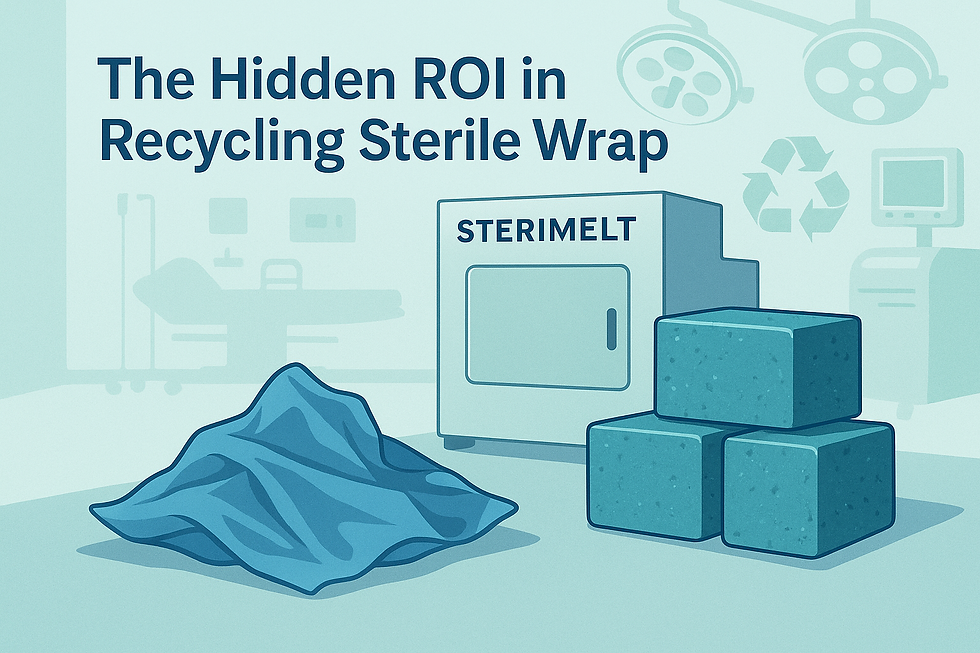
Sterimelt solves this by melting, sterilising, and compressing waste into dense blocks, turning a massive disposal cost into a circular-plastic-economy asset.
The following blog explores seven industries where Sterimelt technology could play a transformative role in material recovery.
5 Key Takeaways
Volume Reduction is Key: Sterimelt reduces bulky polypropylene waste by up to 85%, drastically lowering logistics and haulage costs.
Beyond Healthcare: While famous for "blue wrap," the technology is equally effective for industrial wipes, textiles, and manufacturing scrap.
Sterilisation at Source: The thermal process sanitises materials, making it a safer and more viable option for clinical or contaminated waste streams.
Economic Transformation: It shifts waste management from a "cost centre" (paying for disposal) to a "value stream" (creating a saleable raw material). Many organisations fail to realise exactly how businesses lose money on waste disposal through hidden logistics fees and rising landfill taxes.
Support for ESG Goals: Implementing point-of-origin recycling provides measurable data to support corporate sustainability reporting and carbon-reduction targets.
Traditional Disposal vs. Sterimelt Recovery
Feature | Traditional Laundry | Sterimelt + Single Use |
Energy & Cost | High (£2.40–£3.00/item) | Low (£1.50/item + processing) |
Infection Risk | Cross-contamination in transit | "Point of Use" Sanitisation |
Volume/Logistics | 1:1 (Dirty linen bags) | 66:1 (Solidified blocks) |
End Product | Worn-out "Rag" Waste | High-Value Polymer Feedstock |
Use Case 1 - Recycling Polypropylene Textiles
The textile industry is increasingly reliant on synthetic polymers to create high-performance fabrics.
Unlike natural fibres, modern textile products often incorporate polypropylene fibres to achieve moisture-wicking and chemical resistance. These include breathable fabrics for workwear and various non-woven polypropylene materials.
Traditional textile recycling systems are generally optimised for cotton or polyester blends. When PP-based textiles are discarded, Sterimelt technology can process them by applying a controlled thermal treatment that melts and compresses the fibres into dense plastic blocks.
This reduces textile bulk, creating a concentrated form of recycled polypropylene for the manufacturing supply chain.
Use Case 2 - Disposable Bed Linen
In healthcare and hospitality, the carbon footprint of laundering heavy cotton (transport, chemicals, and steam) often exceeds the lifecycle of high-tech polymers. New breathable, non-woven SMS polymers now mimic the feel of fabric and reduce the risk of bed sores, making them a viable alternative to traditional linen.
By implementing Sterimelt as a "Post-Clinical Resource Processor," hospitals can create a closed-loop system. At a cost of roughly £1.50 per sheet versus a £2.50+ laundry charge, the "spend to save" case is massive, all while ensuring that "dirty laundry" is turned into a sterile, inert block before it even leaves the facility.
Use Case 3 - Cleaning Cloths and Industrial Wipes
Non-woven polypropylene is the standard for industrial wipes used in food production and laboratories. Because they are designed for single use, they are discarded in massive quantities.
Sterimelt enables recovery of this material by removing air and reducing volume by up to 85%, ensuring the polymer remains within the plastics circular economy.
Use Case 4 - Surgical Gowns
Disposable surgical gowns are primarily made from specialised non-woven polypropylene. While currently treated as clinical waste destined for incineration, Sterimelt technology can potentially recover the polymer.
By melting gowns into blocks, the material is sterilised and reduced to a stable, transportable format. This process mirrors the success seen in hospital plastic waste recycling, where sterilisation wraps are already being diverted from incinerators to become high-quality industrial feedstock.
Use Case 5 - Hospital Curtains
Polypropylene hospital privacy curtains must be replaced periodically to maintain infection control.
Instead of treating these bulky items as a disposal liability, Sterimelt technology transforms them into dense blocks. This approach reduces waste haulage costs and provides a consistent supply of material for producing durable plastic goods.
Use Case 6 - Manufacturing Waste and Defective Products
Manufacturers often face "off-spec" batches or scrap material from the moulding process. Disposing of this is an operational cost with no return.
By integrating Sterimelt technology into the production facility, companies can process their own manufacturing waste onsite, converting scrap into high-quality blocks for re-processing.
Use Case 7 - Infrastructure Materials
Recycled polypropylene from Sterimelt blocks is an ideal feedstock for "plastic lumber." This material is used for railway fence posts, outdoor decking, and agricultural supports.
You can explore the technical process of how plastic waste can be turned into wood-like materials to understand why these rot-proof alternatives are replacing traditional timber in construction and agriculture.
The Circular Opportunity
The shift to a circular model is not just environmental; it’s a regulatory necessity. From April 2026, all NHS suppliers must meet "Evergreen Level 1" sustainability criteria.
Sterimelt helps facilities meet these "Green Plan" goals and Scope 3 emissions targets by removing heavy laundry delivery trucks from the road and transforming offensive waste into a localised resource.
From Liability to Asset: The Future of Polypropylene Recycling
Sterimelt technology redefines the lifecycle of polypropylene, proving that industrial waste is a resource, not a liability.
By integrating point-of-origin recycling into your operations, you eliminate the hidden costs of traditional disposal while securing a high-purity material stream for the circular economy.
Whether in healthcare, manufacturing, or textiles, the transition to on-site recovery is a strategic move that supports both operational profitability and environmental stewardship.
Ready to optimise your waste logistics? Contact our engineering team today to explore a Sterimelt solution tailored to your facility.
FAQ
What is Sterimelt?
A patented thermal system that melts and compresses polypropylene waste into high-purity blocks at the point of origin.
What plastic does it process?
Specifically, Polypropylene (PP, Resin #5), including non-woven fabrics and industrial textiles.
Can textiles be recycled?
Yes. Sterimelt melts synthetic PP fibres into solid blocks for industrial reuse.
Which industries use the Sterimelt Technology?
The healthcare, hospitality, and manufacturing sectors produce high volumes of PP waste.
What products are made from it?
Plastic lumber, outdoor furniture, industrial pallets, and automotive components


Comments